

Don’t know P.J. O’Rourke? Want to? Read this
Wake Up
What does music look like?
“The Allegretto” from Beethoven’s 7th Symphony:
The Research Process
I’ve said lots of things in passing about your Hypothesis becoming your Thesis and your willingness (your eagerness) to let your Hypothesis evolve. Here, I want to put it in writing in one place as a reminder of how we get to the Portfolio.
- The purpose of assigning a Hypothesis very early in the semester was not to put you behind or thwart your progress, it was to get the ball rolling.
- You identified a topic. It wasn’t well-defined or as sharp as it would need to be to support an academic argument, but it was SOMETHING meaningful that prompted you to begin to explore source material.
- From here, the process is cumulative and flexible. Instead of wasting your time “brainstorming” about your vague notion, you start to read in your area of interest. From here, the process is cumulative and flexible. And repetitive. Instead of wasting your time “brainstorming” about your vague notion, you start to read in your area of interest. From here, the process is cumulative and flexible. And repetitive. Instead of wasting your time “brainstorming” about your vague notion, you start to read in your area of interest.
- AS YOU GATHER AND INVESTIGATE SOURCES, your vague notion begins to crystallize. You start to have ideas, find angles, develop theories, encounter surprising details you can’t wait to share!
- You gather the best of those sources into your Annotated Bibliography (which starts out as the Proposal+5 and grows from there in support of WHATEVER HAPPENS TO BE YOUR BEST WORKING HYPOTHESIS.
- As the semester continues, you do more research, abandon early ideas, refine your thinking, place new sources into conversation with old sources, and DEVELOP A THESIS YOU CAN PROVE.
- AT NO POINT IN THE PROCESS is there a place where you can get stuck thinking, “I have to solve this problem before I can continue.” Moving forward is the solution.
- You write early drafts of short arguments along the way. First a Definition/Categorical argument. Then a Causal Argument. Finally, a Rebuttal argument, all based on your developing thesis.
- Each of these arguments can be revised as many times as you wish, always for grade improvement.
- Eventually, the entire project coalesces into a single 3000-word, well-researched, carefully argued Research Position Paper that proves a single thesis.
Hypothesis Illustrated:
Self-Directed Lecture (with Task)
-
-
- Brief Introduction
- USAID tested the theory that direct aid to the poor would improve childhood nutrition more than trying to engineer nutrition programs for them, on the theory that the poor know what to do; they simply lack the resources.
- Link to “The ‘Give Directly’ Hypothesis”
- Contains a Brief “Discussion Exercise
- Link to “The ‘Give Directly’ Hypothesis”
-
Hypothesis Hint
- First check out the “Hypothesis Feedback” Lecture page
A Good Hypothesis Described
- Essay writing is like the scientific process, designed to test hypotheses with experiments, not prove preconceptions.
- Research is the targeted search for evidence to test a hypothesis.
- “Analyze Data and Draw Conclusions” (not “Prove Hypothesis”) is the last step.
Claims Task
The non-Portfolio PTSD Claims Task is a critical reading exercise of an assigned reading. It is designed to take less than two hours to complete and has a one-week deadline. The first part of the assignment is to read or listen to the article “Is PTSD Contagious?” The second part is to spend ONE HOUR selecting very short excerpts from the article and identifying the claims it contains.
- “Is PTSD Contagious?” print version
- “Is PTSD Contagious?” podcast
You’ll find both the Lecture material (Claim Types) and the Assignment (Claims Task) at the same link. Check out the essential list of common claim types before you identify and categorize the claims in your small segment of the text.
LINK TO THE FULL TEXT SEPARATED INTO SECTIONS
DEADLINE:
Before Class MON FEB 19
Critical Reading Demonstration
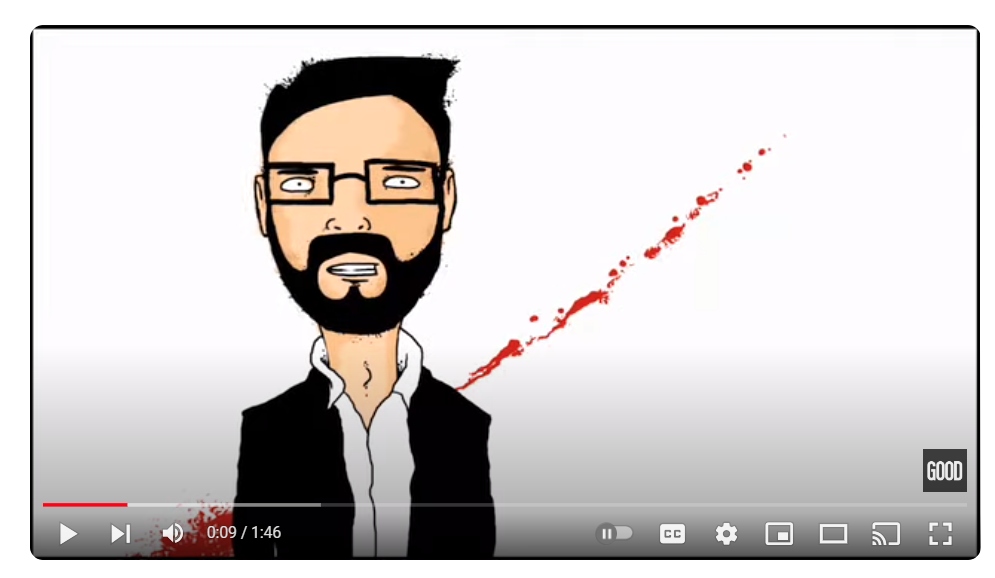
LINK TO THE “LET’S HARVEST THE ORGANS OF DEATH ROW INMATES” VIDEO
LINK TO DAVID HODGES CLAIMS BREAKDOWN FOR THE VIDEO


 The Gamer 2.0
 SleepyCat
 Coffee Lover 03
 doglover7025
 Snowman10
 excellentstudent27
 Gymrat
 hockeyfan
 holistic25
 ilovebeesss
 ilovemydog
 The Gamer
 Naturechild101
 BreakingBad45
 ravensfan8
 temporal111
 thatpersonoverthere
 toetio
 username1132005
 Calm&Patient
 webbwrestler135
 Counterintuitive Spring 2024
Brainstorming is valueless. Search other people’s sources for information.
The annotated bibliography is cumulative.
Never have preconceived notions about what you’re trying to prove. That’s not a research paper, rather that’s a public relations paper. A research paper needs to take an objective view — report what you find.
The portfolio is the final.
The point of the self-directed lecture regarding childhood nutrition was that when there’s an abundance of money than baseline needed to buy healthy groceries, families will do it. Healthy food may not be the #1 priority for families but once their essential needs are met, then they tend to healthy nutrition under the consideration they still have money to spend.
The readers never need to know how close you got to your hypothesis (prediction).
A claim is a declaration about a situation that you believe to exist. It should be based on evidence to hook your reader in.
The better reader you are, the more discernment you have to tease through bias or objective lens from other authors.
‘Let’s’ is a proposition — it’s an indicator of what it is you think we should all do.
It doesn’t need to be true to be a factual claim.
LikeLike
Spectacular Notes, Holistic.
4/3
LikeLike
My grade for these notes (02/14) are a 0 on Canvas. I was hoping to have that fixed! Thanks!
LikeLike
Class Notes 2/14 (WebbWrestler)
Quote- “It’s better to spend money like there’s no tomorrow the to spend tonight like there’s no money”
The Research Process-
The hypothesis is to get the ball rolling
The topic is important because it was something we felt strongly about to write about
Brainstorming by ourselves is a waste of time
Read in our area of interest to cumulate more ideas and information on the topic
As we gather more information than our original idea starts to sharpen and so does our investigation
Our hypothesis might even change over the course of our search
Hypothesis Illustrated-
We discussed the USAID theory that the direct aid to the poor helps with childhood nutrition instead of just engineering nutrition programs, we found they just lack the resources
Claims Task-
Claims are just statements almost 100% of the time we don’t always agree with someone’s
Something we feel that exists, but our readers might not so claims we make have to be backed up by some form of research
Claims Task assignment due before class on MON FEB 19
Definition claim- “ptsd is a psychological disorder” is a definition claim
Analogy Claim- “PTSD is similar to other communicable diseases because it can be spread by a victim to others with whom he interacts,” claiming a similarity of one thing to another
Categorical Claim- would be the naming of several examples of PTSD symptoms (hyperawareness, sleeplessness and quick anger) “PTSD is not only a psychological disorder but also one that can be spread to others through close contact,” you could be making a categorical claim of the sort: PTSD belongs to the category of ailments that can be spread or communicable ailments
Factual Claim- A claim that circumstances or conditions exist beyond doubt. Factual claims can be proved by appealing to indisputable evidence.
Evaluative Claim- A claim that involves judgment of the characteristics of an item or situation. Evaluations are arguable and can be supported by expertise, authority, credentials, or a preponderance of evidence. They can evaluate the quality of an item, its suitability for a particular purpose, or the effectiveness of a course of action.
Ethical or Moral Claim- A type of evaluative claim that places a judgment on a social situation expresses an ethical or moral judgment.
Quantitative or Numerical Claim- Such claims may be factual or evaluative depending on the reliability of the measurements.
Comparative Claim- As hinted above, any claim that two or more things can be ranked involves a comparative claim. “Best” and “worst” involve comparisons, as do “most” and “least” and all the flavors of categorizing by quantity or quality.
Casual Claim- Causal claims are assertions of cause and effect, consequences, preconditions, or predictions of what will occur in certain circumstances
Recommendation or Proposal Claim- Authors who write to convince an audience to adopt a course of action (or at the very least to adopt a different point of view on a topic of social importance) are making a proposal claim. The word “should,” or “must,” or “demand” almost always appears in a proposal argument (and also in Ethical claims).
Attributive Claim- Authors don’t or can’t verify every claim they make, so, to signal that they are passing along someone else’s claim, they distance themselves by an arms-length with a phrase like, “according to,” or “says X,” or “It is said.”
Illustrative Claim- Some claims use the methods of poetry to draw similarities or to illustrate situations. They describe people in ways that evoke sympathy. They compare homes to tombs. They detail the endless paperwork needed to get a simple prescription to illustrate the frustration of medication-seekers.
Credibility Claim- A special type of Evaluative Claim is the Credibility Claim, which names the credentials of the person responsible for the claim, as in: “Harvard professor of Film Ethan Coen reviewed the new thriller.” It’s Factual that Ethan Coen reviewed the film. It’s a Credibility Claim to identify him by his line of work.
SECTION 6
LikeLike
I don’t see the value of pasting the Claims list into Notes, WW.
Your Notes were strong enough without the added words.
4/3
LikeLike
-If you mention something in your opening paragraph make sure you put it in your writing because the audience is waiting for it. Kind of like music because it gives hints in the beginning and delivers.
-Quote of the day: Spend the time right now instead of pushing it past you and waiting. In O’Rourke words better to spend money like there’s no tomorrow then to spend tonight like there’s no money.
-The Research Process: Get the topic down to something in depth and not so broad, especially for a 3000 word essay. Make sure to not brainstorm by yourself, have other people help you and check out other people’s sources. Use your best sources when ready to write. Keep doing research throughout the semester. Do not say you’re stuck during the process, solve whatever problem you have and move forward.
-Essay writing is like the scientific process trying to prove your hypothesis.
-Claim is a statement that you believe in or that you think exists. Your reading might not believe in your claim so you convince them.
-Read article “Is PTSD Contagious” and listen to the podcast and then in 2 or 3 paragraphs find claims and call them out by name. Then describe if you think the claims were good or not.
LikeLike
Nice work, RavensFan.
This:
—I want to say “Solve the problem BY moving forward.”
4/3
LikeLike
We went over the research process which includes our proposal plus five and how it’s intended to help our 3000 word research paper. It serves to assist people with their research process as we wouldn’t need to write our paper all in one go.
Hypothesis illustrated goes over a hypothesis that to impact child nutrition it would be better to give money to people to help child nutrition and it was found that giving people a significant amount of money was what caused a substantial increase. This is talked about in class to demonstrate the importance of allowing your thesis to grow once it’s set. And to let your theory be a bit strange.
A claim is a statement that is ment to see now you identify with them.
I take section 14
LikeLike
I really like “Let your theory be a bit strange.”
3/3
LikeLike
-The Research process: The purpose to assign a hypothesis early was to get the knowledge going or to get the ball rolling. The hypothesis should be narrowed down to the point where there are not many articles or research pieces about the hypothesis. The hypothesis should start to look like a summary of what research is being looked for. Sources should be a guide to other sources that help to better a student’s piece. The best sources go into the annotated bibliography. The bibliography should start at five sources but can go up to how ever many sources are needed. Early ideas should be left behind as the research process continues and the semester moves on. The hypothesis may change. At no point should a student get stuck thinking. Particular evidence is not needed to continue on in the research paper. Each of the three arguments will combine to equal a three thousand word research paper. Each argument can be revised as many times as a student would like to get a possible grade improvement.
-Hypothesis illustrated: A hypothesis can change at any time. Sometimes the first hypothesis made isn’t always the best and most effective. When someone goes back and revises or changes the hypothesis, a better result can be achieved. A person can get a better idea of something when they test a hypothesis even when the hypothesis is not entirely true.
-A good hypothesis described:Essay writing is like the scientific process used to test a hypothesis. Analyzing and drawing conclusions is the last step in the process.
-Assignment: Due before class Mon Feb 19 is PTSD claims task. A claim is a statement made based on some type of evidence to back it up. Read or listen to “Is PTSD contagious?” article and spend an hour selecting little or short excerpts from that article identify different claims it contains. Select which type of claim each of the claims are.
LikeLike
Very nice.
—So true.
—As opposed to:
I hope you get that, EaglesFan.
1. Whatever the evidence shows is the “result,” and it’s a good one if research revealed it to be true.
2. There is no defeat in not proving the original Hypothesis as long as the research shows something worth sharing.
3. One BIG way to WIN is to prove that the Hypothesis must be wrong.
4. Etc.
Keep up the good work, EaglesFan
4/3
LikeLike
– After publishing the Proposal + 5 assignment, we must continue adding sources to our bibliography. Brainstorming with the authors of those sources instead of doing it by ourselves will help us write a better research paper. After finishing our 3000 research paper, we need to go back to the assignment and change “How I intend to use it” to “How I used it”.
– Find evidence to prove what you think needs to be proven.
– A good hypothesis job is to analyze the evidence and test the conclusions.
– Good notes are good examples of how we listen to the material presented in class and interact with this material. It not only provides evidence that you are interacting with the material but also how to put it into practice based on your conclusions.
– Claims: Every claim you make should be based on some type of evidence and share values. Identifying a good claim is the most complex interpretive act you can perform in a text.
– Types of claims:
1. Definition statement: states things that we can also easily agree on. It allows you to define a term however you want.
2. Analogy Statement: Our job is to make clear to the reader what he is trying to describe. Use one thing to try to describe another.
3. Categorical statement: name several examples on a specific topic.
4. Evaluative claim: Implies judgment.
5. Ethical or moral claim: a type of evaluative claim.
6. Comparative statement: compare two things at the same time.
7. Proposal claim: something must or must be done.
8. Illustrative statement: Use the methods of poetry to draw similarities between things.
LikeLike
Very strong Notes, ILoveBees.
Some nuance I’d like to add:
—3. Categorical statement: name several examples on a specific topic. Name the topic that surprisingly encompasses somebody else’s examples. Demonstrate that a situation DOES NOT belong to a named category. (And several other flavors of Categorical claims)
—4. Evaluative claim: Implies judgment or discernment about people OR things. A “safe car” involves an evaluation. A “safe first date” could signal soooooo many types of evaluation, some of them ethically neutral, but many of them “judgmental” in an ethical sense.
—5. Ethical or moral claim: the special type of Evaluative claim that involves passing judgment on people’s behavior or character.
4/3
LikeLike
1. Brainstorming and Research Process:
– Brainstorming is not valuable, rather search other sources for information.
– Annotated bibliography is cumulative.
– Avoid preconceived notions; maintain objectivity in research.
– Portfolio is the final output.
– Topic selection is important based on personal interest.
– Hypothesis initiates the research process.
– Reading in the area of interest helps gather more information and refine the hypothesis.
– Hypothesis may evolve during the research process.
2. Claims:
– Claims are declarative statements based on evidence.
– Different types of claims: Definition, Analogy, Categorical, Factual, Evaluative, Ethical or Moral, Quantitative or Numerical, Comparative, Casual, Recommendation or Proposal, Attributive, Illustrative, and Credibility.
– Claims must be backed by research.
– Claims task due on MON FEB 19.
– Examples of various types of claims provided for clarity.
-my section is 7.
3. Childhood Nutrition Lecture:
– Abundance of money leads to prioritizing healthy nutrition.
– Families tend to focus on healthy nutrition when essential needs are met.
4. Readership and Discernment:
– Being a better reader enhances discernment between bias and objectivity in sources.
– Avoid biased or subjective interpretations.
5. Miscellaneous Points:
– Use of “Let’s” as a proposition.
– Factual claims don’t always need to be true.
– Quote provided for context: “It’s better to spend money like there’s no tomorrow than to spend tonight like there’s no money.”
These notes can serve as a structured reference for understanding the key concepts and tasks outlined.
LikeLike
You are so right, Snowman:
And when you identify them as such, a “structured reference to key concepts,” you invite your Ideal Reader—that would be me—to challenge you on them.
Today I choose
—You’ve summarized the content takeaway brilliantly.
—When money is sufficient to clothe, house, and provide food, THEN any supplemental money can go into healthier nutrition.
But the takeaway of the lesson isn’t in the content. It’s
Wonderful work, as always
4/3
LikeLiked by 1 person
•We found a hypothesis early, the point of this was to provoke thought so we would find knowledge about our topic. At a certain point, we will identify which few specific sources we will use for our essay. – “Get the ball rolling.”
•The purpose of notes is to demonstrate how well we are paying attention in class.
•Claims are a type of statement
•As you research, your ideas will become clearer and more specific.
•Read the podcast about PTSD called “Is PTSD Contagious?” Identify specific claims, and write them down.**
•Different types of claims: Definition, Analogy, Categorical, Factual, Evaluative, Ethical, Quantitative, Comparative, Casual, and Illustrative Claims
•Make sure you have a topic specific enough for a 3,000 word essay.
•Though your topic isn’t perfect, it was something there to get you started.
•Do claims task assignment- shouldn’t take more than a couple of hours and the deadline is in one weeks. Part 1: You can read the article or listen Part 2: spend an hour identifying claims in short excerpts selected from the article**
•Essay writing = the scientific process designed to test hypotheses with experiments, it is not used to verify preconceived ideas
•You write early drafts of short arguments as you go.
1. Definition/Categorical Argument
2. Causal Argument
3. Rebuttal Argument
•Be open to changing your ideas throughout the semester, as long as you are working towards a carefully argued Research Position Paper that proves 1 thesis.
LikeLike
These capture the essence of the 75 minutes beautifully, C&P.
4/3
LikeLike
-The quote was “It’s better to spend money like there’s no tomorrow than to spend tonight like there’s no money”- P.J. O’Rouke
-Our final portfolio is our final
-We learned how to properly do research, and that brainstorming by ourselves is a waste of time. We need to look at many sources to get as much data as possible, then we need to take that data and analyze it to convince the reader we know what is going on. The hypothesis is also bound to change once you are doing research and could stumble across a different topic. The hypothesis is used to get the ideas flowing and conduct our research.
-A claim is an argument you’re making, or a statement about a situation you believe to exist. We have to prove our claim to the reader by conducting good research.
-For our next assignment, we have to find claims in the text, and say why we picked them. The material we have to cover is, “Is PTSD contagious” which we could read or listen to in the podcast. Spend an hour on this assignment. I’m section 10.
LikeLike
Wonderful, Username. You’ve attended to the material, summarized it for personal usefulness, and described it clearly to yourself and your Ideal Reader.
4/3
LikeLike
– The research process: The purpose of starting on the hypothesis is to get the ball rolling on creating your paper. When you keep going back to your sources, you begin to adapt tactics to address your ideal reader. The professor provides aid to students to help them develop new perspectives and get “unstuck” if they’re in a writing block position.
– Note: when the teacher offers conferences to help with revisions and feedback, take them. They benefit the student by offering time to improve and it doesn’t create a problem later for your grade.
– Hypothesis Illustrated: They created a blind study and broke them up into groups, one with money, less money, and no money. There was an improvement after the first time (first time: they blew it all), actually spent the money on things they needed to take care of first, then providing healthy food for the kids.
– A good Hypothesis described: Looking for data that you can test and convince your reader that you know what’s going on with the information you’re presenting. “Proving” your hypothesis is not the goal of your writing.
– Claims Task: Will be covered next week on Monday: “citations”, and “how to write a definition categorial argument”. Claim types were discussed and linked.
What’s a claim? | your explanation of something, A claim is just a statement stating a declaration about a situation you believe exists. You don’t know if your reader will agree with you so you have to have sources as foundations to support your claim further.
– First part | Listen to the article “Is PTSD contagious”, the professor will provide one section to find as many claims as you can, no 2 students will be doing the same.
– Second part | Spend an hour choosing short excerpts from the article and identifying the claims it presents.
– Lecture demo: it suggests that instead of killing inmates with injection, the electric chair, or hanging, you take their organs to repurpose them to save another’s life. The purpose of this assignment is to prepare students for the visual rhetoric assignment coming later.
LikeLike
Wonderful and so thorough. I’m always a little surprised to see that students choose differently from the pool of topics to Note.
4/3
LikeLike
The reason why we were told to start thinking of and selecting a good hypothesis so early was so that it would force us to be productive
Now that we have something selected it gives the opportunity to just go ahead and start our research.
Gathering sources is crucial for this as it will help us select the evidence to support our hypothesis. This is why we did the proposal +5 assignment. It kept us productive and gave a push to the beginning of our portfolio.
This whole process also helps develop our thesis.
Moving forward is the only solution to succeeding.
Essay writing is designed to test hypotheses with experiments.
Research is important to test a hypothesis as well.
There is a claims task that is due by Sunday at Midnight.
The assignment consists of finding different claims that were made in our section of the article.
LikeLike
Simple and direct. Nice work.
3/3
LikeLike
The quote is nice. I totally agree with what PJ said, spend tonight like there’s no tomorrow because in my mind tomorrow is not always given so I feel you should spend the night and have a blast.
The research process is something that we will start soon and we have our hypothesis evolve from here on. Our early drafts will start with a definition argument and then a causal argument then lastly a rebuttal argument and all this will be based on the thesis. Each argument written will end up becoming 3000 word well researched arguments.
Claims Task- Claims are statements that are 100 percent of something that you state of a situation that exists. With that it has to come with evidence that backs it up so your point can be proven. We will review what is given and then understand the argument of the podcast and writing and our job is to find the claims saying was it persuasive or just there and write it down for class on Monday.
When over the multiple different styles and versions of claims that you are able to put into your work when you are attending the assignment given above.
We watched a video on an argument that Inmates organs should be harvested and as a class we broke down the video and taking out the claims that were given.
LikeLike
You might have picked up on different points from in-person attendance, TheGamer, but this does a good job of judging what’s important from the Agenda.
3/3
LikeLike
Quote of the day: spend money like there is no tomorrow instead of spending today like there’s no money, I agree
The point of giving the hypothesis early was to start the work in seeing what you may want to do
Brainstorming alone is worthless, seeing others work and seeing what they do help you find ideas for your arguments
The point of the research paper is to give a casual argument, whether it is good or bad you give what is there
Claims must be backed up with evidence or research. There are different kinds.
Come to the conference to get the grade you want, by that, there will be a discussion
Meetings never hurt they can only help you by giving feedback
Analyze data and draw conclusions, convince the readers we know what is going on
Be open to changing ideas to replace old ones
something doesn’t need to be true to be a factual claim
Claims task due Sunday midnight
LikeLike
That’ll do.
3/3
LikeLike
“Its better to spend money like there is no tomorrow than to spend tonight like there is no money” it is better to spend money on a loved one for one day out of the year than not spend money at all. Being in love is expensive and causes a lot of mental anguish.
Research process: keep adding, don’t waste your time brainstorming it is valueless. Keep going back to your sources and keep letting those sources guide you. As you progress you begin to find angles, statistics, pictures, etc. Your proposal will keep growing as you keep researching. You can ask for feedback on new material if you need a boost or a poke to move off of the same material you keep landing on.
The end of the year conference is the final, this is where you will look over your portfolio with the professor and discuss the work you have done this semester.
A good hypothesis is not going to prove preconceptions, you will analyze data and test for evidence. You don’t want to prove the hypothesis at first, this is the last step.
Claims are very simple language but we are going to use it alot. A claim could be an argument or statement about something. Statements that are almost 100% of the time we don’t automatically agree with everything said. It is a declaration that you make about a situation that you believe to exist. You cannot always assume that your reader will agree with you.
LikeLike
These are brilliant, HockeyFan.
Straightforward, simple, and wise.
4/3
LikeLike
“It’s better to spend money like there no tomorrow than to spend tonight like there’s no money”- P.J. O’Rourke
Discussed research process—–
Purpose of finding hypothesis early on was to get the ball rolling. We identified our topic, wasnt too specific but good enough and it was meaningful. Process is cumulative and flexible, you keep moving and moving. Brainstorming by yourself is pointless and a waste of time. As we begin to gather sources, our ideas begin to crystallized. It is a bibliography + 5, we should keep adding sources. As semester progresses, we should keep finding sources that will help us strengthen our paper. Along the way, we will write some short arguments, (casual/definition and categorical/ and rebuttal argument). They can be revised many times. Eventually we will have a 3000 word research paper that proves our thesis.
Good hypothesis- essay writing is like a scientific process, not designed to prove preconceptions, but designed to test hypotheses with experiments.
Claims task- non-portfolio PTSD claims task—– due next class
Claim- a statement you make that you believe to exsist, you can’t take for granted your reader will agree with you.
Claims task- task should take less than 2 hours. First, read or listen to the article, then spend an hour selecting short excerpts from the article.
Many types of claims – 13
SECTION 9-
LikeLike
Nice work, DogLover.
3/3
LikeLike
P.J. O’Rourke quote: “It’s better to spend money like there’s no tomorrow, than to spend tonight like there’s no money” a uniquely phrased way of saying live life like there’s no tomorrow.
The Research Process: Our hypothesis can and should change as we gather more information through research. Our hypothesis draft existed as a prompt for our research but our final thesis should be based on the evidence we find even if it is contrary to our initial hypothesis.
Self Directed Lecture: Here we learned about an experiment conducted by USAID, which tested the effectiveness of Giving money directly, versus the more traditional approach of teaching people how to spend money. The experiment found the the traditional approach was ineffective. The aspect of the experiment that was stressed to us was the fact that the experiment was not a failure because it failed to prove it’s hypothesis true, it was successful and would have been successful regardless of wether or not the hypothesis turned out to be correct.
Claims Task: for this task we are supposed to analyze a section of reading to see what kind of claims are made. Their are different types of claims such as definition claims, analogy claims, categorical claim etc. The professor’s analysis on the organ harvesting video should act as a model for how we analyze the texts assigned to us.
LikeLike
What a clever Note this is, phrased in the passive to disavow agreement with what was stressed:
It doesn’t say you disagree; but it sure doesn’t say you do. 🙂
Love it.
4/3
LikeLike
LikeLike