
Rules are Arguments

Author Quote

Meet the Ambassadors
Q&A HOSTED BY COMP II FA 23 STUDENTS
- Anderson Kirvan
- Isabella Aquilino
- Nathan Morgan
- Alyssa Gallelli
- Dorian Reyes
- Angelina Harris
Housekeeping
First-Week Checklist
Get up-to-date (or stay up-to-date) with your contact obligations, please.
Riddle

Bottle of Scotch Riddle
Notes Are Arguments

Class Notes
Pro Tips
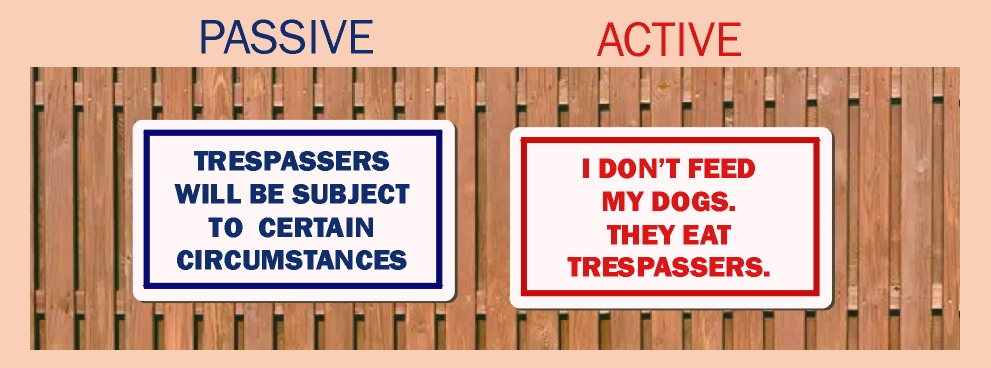
Active Voice and Passive Voice
Class Discussion
- “Let’s Talk Rhetoric”
- The Hopeful Rat Experiment
Today’s New Tasks
My Hypothesis
- First Draft due before midnight SUN JAN 28
Stone Money
- READ AND LISTEN to the Source Material before class MON JAN 29
- Listen to the Invention of Money podcast.
- Pod 1, Pod 2, Pod 3
- Read the accompanying brief source materials.
- Start with “Island of Stone Money” by Milton Friedman
- Be prepared for class discussion and 10-question quiz
- Listen to the Invention of Money podcast.
- First Draft of Stone Money task due midnight SUN FEB 04
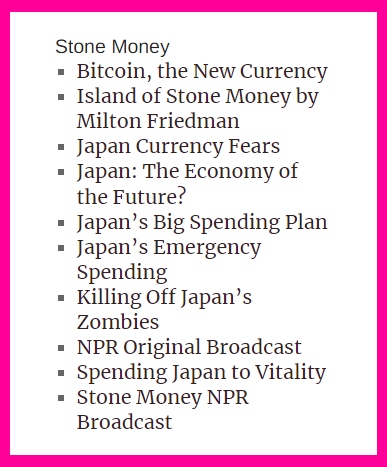
Looking for the Stone Money Material? Find it by scrolling the sidebar until you see something that resembles this:


 The Gamer 2.0
 SleepyCat
 Coffee Lover 03
 doglover7025
 Snowman10
 excellentstudent27
 Gymrat
 hockeyfan
 holistic25
 ilovebeesss
 ilovemydog
 The Gamer
 Naturechild101
 BreakingBad45
 ravensfan8
 temporal111
 thatpersonoverthere
 toetio
 username1132005
 Calm&Patient
 webbwrestler135
 Counterintuitive Spring 2024
– We depend on the blog for everything but grade insertions; daily agendas and deadlines are all on the blog. You have the opportunity to fix your work after it’s been graded; this is a rewriting class so use the feedback given by the professor to improve your work.
– An argument is a proposition given; you can choose to accept it or refute it. We used the example of a traffic sign saying you can’t park here. We can accept this and not park there, or we can choose to ignore it and possibly get a ticket or be towed. If the sign doesn’t state the consequences of parking there, who are they to tell us we can’t park there? What is stopping me from posting my own no-parking signs?
– It’s important to talk with the professor if you have “a lot of stuff going on,” if you explain your case the professor will be able to work with you to get through the semester.
– We met with ambassadors who took this class previously to answer any of our questions, this was completely confidential between students and ambassadors.
– A rhetorical question is something that is asked that doesn’t require an answer, it’s like a statement in question form.
– First Week Checklist: We went over what each student needs to complete by the end of the first week (send a text and email, create a username for the blog, and showed up to the first class) photos were taken during in-person class today.
– Riddle: “Why is there no such thing as an empty bottle of Scotch,” we were advised that there is no such thing as a bottle of scotch if it was empty; it could be an empty scotch bottle, but saying a “bottle of scotch” implies that there is scotch in the bottle. This introduced us to rhetoric: saying the same thing differently that could be inferred in different ways. The basis of good writing is the lead the reader to a conclusion that they believe they came to on their own.
– Notes are arguments; you decide what is valuable and are able to provide a takeaway. Good notes indicate what was taught or what the professor wanted to teach us and how you interpreted it. It’s better to write what you learned rather than what happened. A passive voice leaves room for interpretation while an active voice emphasizes the action and is preferred when taking class notes.
– My Hypothesis is due this Sunday, Jan 28: Come up with a hypothesis that you want to write about. Be as specific as you can possibly be.
– Stone Money is due Sunday, Feb 4: Listen to the podcast before class next Monday so we can discuss it.
LikeLiked by 1 person
I love these Notes, SleepyCat.
I wish I had actually said this:
If I actually did, please let me know, SleepyCat. It’s brilliant.
Do you see why that’s such good advice? Could it become your goal?
4/3
LikeLike
Anytime I say anything it’s an argument.
Your final draft takes a lot of effort to get there.
A writer shouldn’t fall in love with its first draft.
Rhetorical question: making a statement in question form. No expectation for an answer.
Rhetoric: how you say what you say (example: we just looked at 6 different ways to say the same thing).
Active: says who did the thing
Passive: leaves it open to interpretation (doesn’t say who is going to do it)
Readers who come to their own conclusions are more likely to find your work persuasive.
*Lead your reader to the conclusion you’re trying to draw, thus it’ll empower them in their takeaway.
Good note: the value of coming to conclusions (i.e., takeaway)
Bad note: stating the obvious
A good hypothesis is as specific and narrow as possible (who, what, why, when, how).
If you’re having trouble logging into WordPress, click the title “Counterintuitive Spring 2024” and look for the “logout” feature.
Taking meetings with Professor Hodges help students succeed in this Comp II course.
LikeLike
Beautiful Notes, Holistic:
Do you recognize the similarity here?
Grade 4/3
LikeLike
-All text is an argument. It all depends on our opinions on the credibility of the creator of the writing. For instance, parking signs. We may challenge the credibility of the creator of that sign by ignoring it, making it an argument.
-Writing is destined to be a difficult process. If we submit a first draft and it’s perfect, it won’t actually be our first draft. If you submit your actual first draft, it will not be perfect. We can rewrite as many times as we would like to improve our grade through each submission.
-The bottle of scotch riddle illustrated rhetoric. All 6 sentences shown are almost the same thing however can mean different things. “She hit me with a bottle she has emptied of Scotch”, leads the reader to believe she had drunk the bottle by jumping to that conclusion. This is a great way to lead a reader to persuasion by their own conclusion that you lead them to.
-Hypothesis needs to be extremely specific. We should come up with a broad topic and continue to narrow it down as much as we possibly can.
-I realized towards the end of the class, I have not necessarily met the bar with notes expectations, I need to focus more on what I can take away from each section rather than repeating what has been said by the professor.
– Active and Passive arguments or both have their benefits depending on the situation.
LikeLike
You’ve really stepped up your Notes game, ExcellentStudent. The only one that misses the mark in this set is the Active/Passive one since it contains the extremely vague “depending on the situation” phrase. Obviously no set of Notes can record the entirety of a lesson, but in a few words you might have said:
—Active and Passive arguments are valid in different situations. Passive is unavoidable when the Actor is unknown, and it’s good for emphasizing the Action or to hide the identity of the Actor.
(It’s also true that while I was composing that complex sentence I would have had to ignore other content, so I recognize the dilemma of striving for ideal Notes. 🙂 )
Grade 4/3
Keep it up!
LikeLike
notes from class today:
The best way to pass the class is by talking to the teacher and always letting him know what is going on in my life
Everything is an argument
Even when parking it is an argument because sometimes it could be somewhere that you are not allowed to park causing you to either abide by the law or face the consequences.
Your daily notes are an argument. We must receive, recognize, and take in whether they are legitimate. The point is to decide for myself to see if there is something of value to take away from the lesson.
The bottle of scotch riddle introduced us to the idea that the way something is written could be interpreted differently. Also, something could be said in different ways meaning the same thing just not being particular
Rhetorical questions: to be more dramatic rather than specific
Passive: shows consequences, but is not too expressive. More of a threat that is a bluff
Active: straight to the point of what is going to happen.
Active is better when using
When note-taking make sure it speaks more about what I learned rather than a summary of what happened in class.
LikeLike
Good stuff, Gymrat.
3/3
LikeLike
– An argument is made when we prove a proposition. The person who is exposed to this argument has the right to accept it or deny it resulting in another argument, for example, parking at a traffic sign that indicates do not park. The person or people who put up that sign are making an argument that no one can park in that parking lot. The other person can decide if they want to park there or, if they decide to park there, they will have to deal with the consequences of their actions.
– This course reinforces the idea that if you are serious about writing something good it will be difficult. A well-written paper requires work and effort. It requires understanding that the first draft will not be perfect and that we will have to be open to feedback and make corrections.
– Rhetorical question – making a statement in question format. Meaning that it does not necessarily need an answer.
– The bottle of Scotch rittle teaches us about rhetoric, which is the way you say what you say. For example, the vocabulary you use can be active or passive. The active vocabulary indicates who did the action and the passive leaves it open to speculation. Using “by zombies” can help you identify if it is passive or active. If adding “by zombies” after a statement makes sense, saying that the action is performed by zombies then the sentence is passive.
– Notes are arguments – You have to decide for yourself what has value and be able to transcribe it to your own understanding, thus demonstrating that you have learned it and not just heard it.
– Before starting any assignment or making a comment on the website we have to make sure that we have logged in with our email and appropriate username.
LikeLike
This, in particular, is a really good example of your understanding, ILoveBees:
Grade 4/3
LikeLike
– Rhetoric is how you say what you say. It is a way to effectively convince or persuade.
– We also talked about active and passive. The difference between the two is active is who did the thing and passive leaves it for speculation. A way to figure out if things are active or passive is by doing the zombies test.
– Passive writing helps with making actions more pronouced.
– We also spoke about a riddle in class which had to do with a bottle of scotch. This riddle showed the idea of how writing can be percieved differently by every person depending on how you write it.
– A good writer is able to let the reader believe or actually let them come to their own conclusions. Readers who come to their own conclusions are more likely to find your work persuasive.
– We met with ambassadors today. These ambassadors were students who took this class already. The class asked questions if they had them.
– There is a difference between good and bad notes. It all depends on the takeaway that we get from it. Our notes will inicate the value of what we think in class. A bad note is useless and doesn’t make any observation. A good class note says what I learned.
– For our hypothesis, which is due this Sunday, we need to actually delve into the question. With the hypothesis we should be more specific and not ‘boring’.
– The Stone Money assignment is due next Sunday. Listening to the podcast will prepare us for class on Monday. We will be able to discuss what we learned from it.
– The checklist we went over during this class helped us see what we are missing and need to submit.
– It is good to submit drafts and to take back feedback. Doing so will help improve grades.
LikeLike
These are good Notes, ILoveMyDog, but I have notes of my own.
This is quite beautiful:
Any time you’re tempted to say “We talked about” or “We discussed,” skip it. Instead of:
Try:
Or even:
Yes, I’m a pain in the ass.
One more thing. Your Stone Money ESSAY is NOT DUE SUNDAY. But I do want you to listen to the podcast and read some supporting material by midnight SUN JAN 29. The essay will be due the following Sunday at midnight.
Nice work overall. You clearly understand the value of Notes to record the takeaways.
3/3
LikeLike
-This class focuses on re-writing, so it is important to ask for feedback and use it to your advantage to create a better piece of work. We can also have meetings with the professor to get a further understanding of how to improve our writing.
-An argument is used all of the time and especially in text. The example in class today was about parking signs and whether or not you would accept or refute the argument of if you can park somewhere. This example made us think deeper about arguments and get a better understanding of how they can be used in texts.
-The professor discussed the good vs. bad class notes and how to make the notes the best they can be by comparing two different ways of wording the notes. There were passive examples and active examples. Passive notes are ones that can be left up to interpretation and active notes are more direct addressing the who and what. We learned that passive is not always wrong and active is not always right. When you do not know who did or discovered something, that is a good example of passive.
-Alyssa and Nathan, who are ambassadors, came in to do a question and answer session to learn more about the course and professor. They gave helpful advice and answered all questions that the class had.
-The bottle of scotch riddle introduced us to the idea of proper grammar and mechanics of how to properly write a rhetorical sentence. There were six examples as to how to write a proper sentence including this scotch bottle, and only one was incorrect. This was helpful to show proper grammar and to see multiple examples of rhetorical sentences.
-We went over the hypothesis assignment due before midnight on sunday. What are we going to write about? We have to make this as specific as possible and make sure to make the point clear as to what we are writing about.
-The stone money assignment is our first writing assignment consisting of 1000 words, which is due Sunday February 4th. For these assignments there are also podcasts that have to be listened to.
-We learned how to log-in to the blog and by clicking on the title it should help with the processing of logging in so that our replies do not come up as Anonymous.
LikeLike
First of all, I’m delighted to see you were able to log in to WordPress and have these Notes recorded to your anonymous username, Username! 🙂
I really like your takeaways:
—Use feedback and conferences to my advantage
—All text, even a NO PARKING sign, is an argument
—(Your professor was not aware he was using the Active/Passive comparison as a way to emphasize the difference between class Notes Good or Bad. But, OK. Did the comparison help?)
—I’m glad to hear you were helped by Alyssa and Nathan. (Was that Active or Passive?)
—You learned a lot from that Scotch bottle example! 🙂
—You’re exactly right that the only valuable Hypotheses are very specific Hypotheses.
—You’re correct that the essay is due SUN FEB 04. But you didn’t note that the deadline for listening to the podcast and doing some preliminary reading is midnight SUN JAN 28. Generally speaking, you don’t need to repeat assignments in your Notes, but if you choose to . . . .
Apparently, that—or some stroke of luck—worked for you! 🙂
Very thorough and compliant Notes, Username.
Grade 4/3
LikeLike
-Rules are arguments: All rules can be considered as arguments. A parking sign can be considered an argument because people can choose to believe it or not. If they want to park in a no parking area they can but they also then choose to deal with the consequences. The person that put the sign there can technically not be a higher up or an individual with power and could just be a regular person. They could put their own parking sign down on their street and if people choose to believe it as a higher up then the person who put down the sign won the argument. The sign is simply just a statement. That is why it is an argument.
-Riddle:Riddle was shown saying why is there no such thing as a empty bottle of scotch? This is because if the bottle is empty it is no longer a bottle of scotch. The riddle is a grammatical error and it needs to be changed. It can be said as she hit with a empty scotch bottle. This can now be thought upon and make a person believe the woman hitting you with the bottle is drunk although it doesn’t explicitly say it in the sentence. The meaning behind all this is to show rhetoric. The more people make solutions to your question, the more persuasive you have become. They believe in your question so much that they answered it when it shouldn’t have been answered.
-Notes are arguments: Notes are arguments as you make the statements. What you write down is something you most likely believe. They are statements based on other people’s sayings or showings which persuaded you to write those statements. The argument is whether they are believable or not. If someone likes your notes or believes they are right, you have now won the argument because they believed in your work. They are not comparing it with theirs and showing you their notes to prove a different point or that you are wrong. That would continue the argument.
-Active vs Passive voice: An active voice is when a person or thing is the subject of a sentence. “I don’t feed my dogs.” In this case I would be the main subject because I am doing the action. That would be a active voice. A passive voice is when you want to hide the person or voice behind the action. The action takes the main subject of the sentence. A passive voice is more for if a person wanted to hide the subject in the sentence.
-Take home assignment: Read and listen to stone money before Monday’s class. Due Feb 4 at midnight is the first draft of stone money. Due this sunday my hypothesis.
LikeLike
I like your thorough explanations, EaglesFan.
—NO PARKING sign. It’s an argument, all right. And not JUST because the sign poster might be a rogue civilian! Even when a legitimate authority like the Municipality posts a sign, it’s still a Proposal Argument. It says, in effect: You SHOULD NOT park here because of the harm to the public good AND because you will risk consequences if you don’t. Those are declarative statements that purport to be facts. It’s up to the driver to decide whether they add up to a compelling argument against parking beneath the sign for a few minutes.
—EMPTY BOTTLE OF SCOTCH. We can quibble about the effectiveness of the language you used to describe Rhetoric, EaglesFan, but you do make clear that you understand the takeaway: Every word—and where it falls in a sentence—contributes to the meaning of a claim. And the other takeaway: A good writer can find the perfect phrase to seduce a reader into drawing conclusions NOT SPECIFICALLY STATED in the sentences.
—NOTES ARE AGUMENTS. Fascinating. You’re ahead of the curve here, EaglesFan. In another class, very soon, I will introduce the concept of the Purposeful Summary. Good Class Notes are just that: summaries of what was said that condense the speaker’s content into a summary that suits the Notetaker’s purpose.
—ACTIVE VS PASSIVE. I totally agree. But also, passive isn’t necessarily dodgy or nefarious. If I say “Trickle-down Economics HAS BEEN DISPROVEN over and over,” I don’t choose to HIDE who disproved it. It might not be a person at all. THE ECONOMY itself could disprove the Trickle-Down theory by not behaving in a way to confirm it.
Thanks. That was fun. I hope you found my reactions helpful as well. You could say so if you like. 🙂
Grade 4/3
LikeLike
– Students will find and receive grades on canvas, deadlines will be firmly updated by the end of the week. Notes will be graded because they are a type of argument. They take what we were told and present the purpose of the information given.
– All claims are arguments waiting to be had, the point of an argument is to change people’s views and persuade them to accept new and different points.
– The professor talked about his nose and pointed out an issue. The lesson for this was to remind students to always keep being authentic, once again, keeping open and flowing communication with the professor leads to success.
– The first draft due soon will take various trials and errors. It was a reminder to students that things will get bad before producing anything great, the struggles of a writer. The draft to be officially submitted might not be the very first one to be written, which is okay.
– Rhetorical questions are questions in statement form, they aren’t meant to be answered. The point of them is to leave the listener with a thought without opportunity to develop different responses.
– We went over a riddle that made us see the importance of how we phrase or say rhetoric. A helpful tip was to add “by zombies” at the end of a statement to see if it’s passive or active. Active wording tells the viewer who did the action and in what manner, while passive leaves a open window for speculation and lets the viewer draw conclusions of their own.
– Class notes are arguments that you receive, interpret, and record the purpose of pertaining to the lesson. It’s up to the individual to decide what points they find important or valuable enough to take in. Writing notes lets the writer take in the same information given to everyone, and make it into their own understanding. This help encourage active learning, helps organize critical information, and makes it easier to review when trying to remember what was discussed. A good note introduces the idea that the language and tone used is important, it tells the difference between what has happened and what was learned. Bad notes are simply observations of what took place and have no use in telling what the lesson was about or what should be taken away from it.
– The hypothesis is due sunday, it’s recommended when tackling a broad topic to be as specific as possible.
– Stone Money: Our first writing assignment that requires 1,000 words and is due Sunday, Feb 4th. Listen to the podcast before next class and be ready for discussion!
LikeLike
You’re working so hard here, NatureChild, and I appreciate it so much. I hope you think it’s worthwhile. If not, please let me know. And please, if you’re willing, share any reflections you may have on today’s class. Thanks.
Grade 4/3
LikeLike
Blog Dependency:
All information on the blog except grade insertions
Daily agendas and deadlines accessible there
Opportunity for post-grading work revision
Argument Concept:
Argument as a presented proposition
Choice to accept or refute.
Example: Traffic sign and parking
Questioning authority if consequences are absent.
Communication with Professor:
Importance stressed if dealing with a lot of commitments.
Professor willing to work with students through challenging times.
Confidential Ambassador Meetings:
Ambassadors who completed the course share insights
Confidential discussions between students and ambassadors
Rhetorical Questions:
Statements in question form
No need for a direct answer
First Week Checklist:
Requirements for the first week:
Send a text and email.
Create a blog username.
Attend the first class.
In-person class photos taken
Riddle Takeaway (Bottle of Scotch):
Perception depends on reading and writing style.
Bottle’s status (empty or not) is subjective.
Interpretation varies based on individual perspective.
Notes as Arguments:
Decision on valuable content
Good notes reflect teaching and interpretation.
Emphasis on writing what’s learned rather than what happened.
Preference for active voice in class notes
Upcoming Deadlines:
My Hypothesis due Sunday, Jan 28
Formulate a specific hypothesis for writing.
Stone Money due Sunday, Feb 4
Listen to the podcast before the next Monday’s class for discussion.
Improvement with Feedback:
Opportunity to boost grades.
Option for regrading assignments based on feedback.
Everything has an Argument:
All discussions involve arguments.
Even seemingly mundane things convey messages.
Example: Yellow bore signifies something
Interesting Chat with Isabella Aquilino:
Beneficial discussion with a former course participant
Learning about Perception:
Interpretation shapes how we hear and see situations.
Example: Drunk person imagining absence of scotch in a bottle
Active and Passive Notes:
Both have pros and cons.
Active notes focus on key points for clarity.
Passive notes capture a wider range of information, allowing interpretation.
Combining both types ensures a comprehensive understanding.
LikeLike
I find your Note style deeply intriguing, Snowman. 🙂
This one doesn’t work for me:
EMPTY BOTTLE OF SCOTCH
Perception depends on reading and writing style.
Bottle’s status (empty or not) is subjective.
Interpretation varies based on individual perspective.
While the observation, “Status is subjective” is generally true, in this example, how “empty” is defined or perceived is not the issue. Only the innate disparity between “empty bottle” and “bottle of scotch” matters. And while it’s equally true that “interpretations vary,” the point of this riddle and its explanation is that a writer can influence interpretation with very careful syntax, such as “the bottle she emptied of scotch.”
I love brevity.
But only in service of understanding.
Grade 4/3
LikeLike
All text is argument
Writers are people whose writing is more difficult than others
Rewrite drafts
Rhetorical questions are questions meant to make a point, not to be answered
No good definition of rhetoric
Writing that makes you come to your own conclusions makes you feel smart and thus is more convincing
The bottle of scotch riddle showed that you can write something that implies something that’s not necessarily true, also that you can write the same thing in different ways
LikeLike
these were my notes, the blog signed me out
LikeLiked by 1 person
Are you claiming the 2:05pm Notes , Temporal?
LikeLike
yes
LikeLike
Got it.
Have you since figured out how to Log In so that your future Notes will tag themselves as yours?
No good definition of rhetoric
—That may be, but you were presented with examples of ways to convey information that compelled a certain interpretation. They were meant as roundabout definitions of Rhetoric.
Writing that makes you come to your own conclusions makes you feel smart and thus is more convincing
—That’s one example, yeah.
The bottle of scotch riddle showed that you can write something that implies something that’s not necessarily true, also that you can write the same thing in different ways
—Correct. You can also use Active and Passive Voice constructions to guide readers to different conclusions. You can also hint at vague consequences or state clearly the cost for certain behavior. That choice, too, is a Rhetorical Choice.
Don’t ignore content in an attempt to be pithy, Temporal. Brevity is deeply prized (by zombies), but content is king.
Grade 2/3
LikeLike
Every class we are instructed to take notes. These notes are there for a purpose, that purpose being to remember the important information given.
All text is an argument, such as street signs, which we learned can be either passive or active.
Professor Hodges began class by saying he had a bump on his nose, he said he thought about wearing a mask but there was no authenticity to that. He also told us that if we ever have something going on we can talk to him about it. Being open with your professor allows them to be more empathetic to your needs. He explained this in a story about a student from last semester.
It is important to remember that your first draft is not going to be perfect. He allows you to resubmit until you feel it is to your liking. This also requires communication from him and being open to his feedback he gives you on your papers.
Two students from last semester came in to speak to the class about any worries we may have concerning the class this semester. This allows the students to feel more comfortable, as well as a feeling of what they should expect this semester.
We viewed a riddle about a bottle of scotch. We then went on to discuss that by using different types of grammar a saying can have different meanings. By using different types of grammar you can persuade a reader to think of different meanings of a saying.
It is important to know the difference between passive and active tones. By changing certain words or adding certain words it changes the meaning of a saying completely.
We have a hypothesis assignment due Sunday night. Professor Hodges explained that you should narrow down your topic to a specific area as opposed to a broad spectrum that could be hard to interpret.
Our first writing assignment is due Sunday February 4, and requires 1,000 words. This assignment can also be resubmitted if you would like to follow the professor’s advice when he critiques it.
LikeLike
Hey, HockeyFan!
You’re doing good work here.
I’ll offer Feedback even on your class Notes just to get into the habit of posting, hearing responses, and reacting to those responses. I’d love to have your feedback on my feedback.
—True, but not the whole truth. Notes serve several purposes.
1. They permit or even require devices in the classroom, but occupy my students’ time so that they’re less likely to spend class time watching soccer matches.
2. They constantly reinforce the primary academic practice of listening carefully to persuasive presentations, evaluating their content and rhetoric, and summarizing them into new language that responsibly represents the author’s intentions, but permits the new author (that’s you) to characterize the content in a way that suits the purpose of the new author (that’s you again).
3. They add breadth and depth to the examples I will consult to justify your overall semester grade.
—None of your classmates thought that anecdote was worth Noting, HockeyFan. I’m impressed that you did. I hope it means you’ll feel comfortable leveling with me about challenge you may face. Thank you.
—I wish I had nuanced that point. They can very well be perfect first drafts. But even the best first drafts are not as good as a finished paper could be after revisions.
—You may never need to know this, but you’re impressing me, HockeyFan, so I’ll share this with you: it’s actually syntax, not grammar, that help you be more nuanced in your writing. All the example sentences were grammatically correct but the word sequence leads readers to different interpretations of the facts.
—Nothing factually incorrect in what you say there, HockeyFan, but it doesn’t communicate much. The differences between Active and Passive voices are much more specific than that. You could try again, if you like.
Grade 3/3
A 4/3 is readily available if you want to pursue it.
LikeLike
Briefly discussed arguments
Student(s) came in explained the course and answered questions. You will pass the class if you communicate with him.
Did riddle and housekeeping- Riddle was “Why was there no such thing as a bottle of scotch?” There’s no such thing as a bottle of scotch because there is no scotch in there currently.
Talking about the good vs. bad notes. We have to make sure we really explain the notes from the agenda
Hypothesis first draft will be due on 1/28
New “Stone money” assignment- be prepared for 10 question quiz and in-class discussion
Passive vs. Active notes- “I don’t feed my dogs, they eat trespassers” who feeds dogs.. I. Who eats trespassers, DOGS. It’s active
LikeLike
OK
Grade 2/3
LikeLike
This is @VanillaWoods64!!
•All text may be interpreted as an argument. This is dependent on our personal opinions on the topic and it is up to the person to decide whether they want to take in the information or leave it.
•A good writing piece takes time and effort. It won’t be easy. A good writer will slow the reader to come up with their own ideas and interpretations of the text.
•Notes will be graded. Due dates on Canvas will be solidified by the end of the week.
•The hypothesis is due Sunday.
•A rhetorical question doesn’t require an answer.
•Parking can become an argument as well, sometimes it comes down to parking illegally. It is a debate whether to follow the rules or face repercussions.
•Riddle: There is no such thing as an empty bottle of scotch because a bottle of scotch without scotch is just a bottle!
•Listen to the Podcasts before next Monday and be ready to discuss in class!
LikeLike
Good Notes.
They show an attention to the takeaways.
Grade 3/3
LikeLike
One of the takeaways was that notes are arguments that help us base things on lessons and experiences. With the right notes you can portray and persuade the author to your vision and gain the reader onto your side with the correct information. The lesson learned from the riddle of the scotch is how many things cannot be classified as itself if it is empty. If the scotch is empty in the bottle then there is no scotch in that bottle. Showing that once it is empty they have no value making not what it was originally.. I learned the value of taking notes today as well because I learned the content and the value of rephrasing new information. I learned why notes matter in the class because it doesn’t just help you learn but the value you put into the notes can make a very remarkable impact on yourself. I learned the importance of passive and active and learned the differences on why they are needed in situations to show the right scenario. The Hypothesis is due Sunday and should be a specific topic as specific as you can before submission.
LikeLike
Thanks for the feedback, BreakingBad!
3/3
LikeLike
– Rules can be arguments. Rules can be considered arguments because it is up to you if you want to follow them or challenge them. Like a parking sign the person could park there or deal with the problems that could come after it.
-The Scotch riddle helps understand ways people say things. If you phrase a sentence or speech it can totally change the meaning of what you are saying.
-Notes are arguments. The way you write your notes is the way you believe. They can be right or wrong. You can make notes very well written and organized and someone who is looking at your notes can be persuaded by them.
-Passive voice does not fully tell someone what is right or wrong. Or what you can or can not do. It is kind of unsure. Active voice is much more clear and makes the person understand what is directed.
-Homework is listen to Stone Money before class next Monday. Draft is due Sunday night for hypothesis
LikeLike
Nice phrasing, RavensFan. 🙂
3/3
LikeLike
– All text is argument which is true in most cases
– A writer is someone whose writing should be more difficult than others because a writer always has to perfect their work and if it is not perfect it’s trash and has to be done again but for others who do not care and just submit it.
– Passive: Someone who says something but not saying directly at you like from a distance
-Active: Someone who tells you something directly and upfront with it rather than from a distance.
-Talked about the basic equipment needed in the classroom everyday and things that are important to know for this semester.
-Riddle: We talked about there being nothing such as an empty bottle of Scotch, rather rewording it in ways that would make more sense for the reader and people to understand. This was the beginning of rhetoric and how we got a better understanding of it as well.
-Good notes are taken and are well written to get a greater understanding of what you have learn or read
-Bad notes are simple things and obvious things to know.
-Submitting assignments on time will help a lot by getting feedback for the professor and knowing what to improve on.
LikeLike
It probably seems like overreach for your Professor to critique and grade your Class Notes, Gamer, but these daily opportunities to evaluate a text (the lectures and classroom presentations), find something of value in the new material, and summarize it into your own language to memorialize what you’ve learned, are the essence of the coursework: Purposeful Summaries of the work of another writer conducted in a semi-formal academic environment.
So, they deserve grades.
Yours need work:
—It’s true that Passive is less direct than Active, but the difference between the voices is grammatical and quite specific. The active identifies who Acted. The Passive does not mention the Actor.
ACTIVE: The dog at the trespasser. (The DOG is the Actor)
PASSIVE: The trespasser was eaten. (We don’t say who ate the trespasser)
That’s the difference grammatically. The TACTICAL reasons to choose Active or Passive were described in the lecture material. You didn’t share that you learned when to use one or the other.
—This is classic “Talked About” language and will fail every time. It doesn’t communicate a thing. It names two topic (equipment and things). That’s it. Your reader (even if it’s you a month from now), will have no idea what’s “important to know.”
—More classic “Talked About” language.
—Why is there no such thing as an empty bottle of Scotch?
—If anything, we should have learned that from your Notes, along with, possibly, a brief explanation about the need to phrase your claims very precisely to avoid being misinterpreted.
Grade 2/3
LikeLike
1/22 College Comp Notes
Learning more about Professor Hodges-
* Very open with students
* Very easy going if we show effort
* Detailed how if effort is shown then Prof. Hodges will show effort with us
* Be open with Prof. And he will be open with you
Met with his class ambassador Alyssa and she told us about her experience with the class, told us more about Prof. Hodges teaching, grading and life style.
Grammer Notes-
Learned the rhetoric of the saying “empty bottle of scotch”
Bottle of scotch riddle had explained to me that there’s a deeper root to the form of a sentence then saying there’s an empty bottle of scotch, even though there is actually no such thing
Notes are arguments-
When receiving statements or claims we have the opportunity to reflect on them and then interpret them into what we found important enough to record them in our own style
First Draft is due Sun. JAN 28
“Hypothesis”
Have a good deep meaning behind a topic you may or may not be passionate about
Learned the difference between passive and active statements-
* Passive leaves the reader with questions or possible guessing
* Active is more broad or straightforward
LikeLike
January 22nd, 2024
College Comp II
Professor Hodges
Rowan University
Class Notes:
As for todays class discussion Professor Hodges brought in students from last semester to discuss a couple of things for around the last half of class about what to expect for the semester as well…
– First we talked about messaging the professor when something is needed to be said and it needs to be discussed and we aren’t in class, give him a text or an email to stay in contact.
– Always make sure that we are taking down notes in class and turning them in, and also make sure that they are being turned in for grading
– If you do all the class work its great, but if you aren’t able to you should let the professor know when is it that you aren’t able to.
– Always always make sure you are letting the professor know when you will not be in and why if you are able to say why just so he can be understanding and understand you and know that you need your time and space because he just cares.
Hypothesis draft due:
– Hypothesis that was discussed in the last class on Monday will be due on Sunday January 28th make sure it is completed and turned in.
Stone money assignment:
– Today in class we discussed the topic on stone money.
– We also talked we discussed if bitcoin was real money. My answer to that was no completely. I say no because I know that bit coin is just money on the internet and its not money that is in real life that we can actually use to by things and pay for things.
***Assignment for stone money due Monday January 29th***
– We have to listen and read the source material before the next class…
– We have to listen to the 3 podcasts and any other resources that are available to help with the discussion and completing the assignment as well.
– We need to start with the island of stone money and go to class next time to answer a 10 question quiz.
LikeLike
I don’t know why its not putting my username but this is Coffeelover
LikeLike
Rules are arguments.
Quote
Bottle of Scotch Riddle
Class notes
Active and Passive voice
LikeLike
de-emphasizes them.
4/3
LikeLike