definition rewrite-brettbcomp2

The arising battle of heroin addiction is prominent in the city of Vancouver, Canada.  Heroin addiction is a very unstable and extremely dangerous. In many cases this addiction leads users to commit crimes to support their habit.   Addicts are  more focused on getting their next high then they are about using heroin safely.  Normal routes of defeating this addiction include giving the heroin user methadone, which is a substitute for heroin, even though 15-25% of addicts do not react to the prescripted drug.  Vancouver has a taken on a new way of battling heroin addiction.  By giving the user the very own drug that is corrupting them.

Fighting fire with fire, Vancouver has set up clinics which gives heroin users free prescribed heroin.  At clinics such as Vancouver’s Providence Medical Clinic, the addicts are given a safe place to ‘shoot up’ while being supervised by medical personnel, incase anything may go wrong.  They are given sterile needles which helps decrease the factor of disease spread through dirty needles in common use.  Users who use these clinics also have no fear of being arrested, because safe use is condoned in them. 

Studies made in Europe with these programs have shown a positive outcome, with reduced crime and improved public health.  Giving heroin to heroin addicts to help them fight their addiction may seem counterintuitive, yet these clinics have shown many positive results.   Giving this option of ‘treatment’ to heroin users is exactly what some of them need.  Some do not respond to regular treatment techniques and having this option is extremely beneficial in an addicts life.

http://www.theatlantic.com/health/archive/2014/11/vancouver-experiments-with-prescription-heroin/383086/

http://www.huffingtonpost.ca/2014/11/25/prescription-heroin-vancouver-salome_n_6215188.html


Posted in X Archive | Leave a comment

Definition Essay Rewrite- taddo

The word addiction can mean a lot of different things, to a lot of different people. For most, addiction is just the idea of not being able to give something up. Addiction is classified as a brain disease. Addiction causes compulsive substance abuse, despite any harm that could come from it. The city of Vancouver is facing an addiction problem among their people.

In Vancouver, there has been a heavy and dangerous use of heroin. Heroin is a highly addictive street drug that is very popular in Vancouver. People who suffer from this addiction are willing to go to extreme lengths to acquire this drug. Addiction can ruin a person’s health, relationships, careers, and much else. Vancouver is seeking out these addicts with the idea of helping them with their addiction.

Vancouver has set up an experiment where they will give some addicts doses of methadone and other addicts doses of heroin. They have set up something called Insite, which is essentially just safe zones for people to go to in order to receive the free doses of heroin. Most of these people would be out on the street committing crimes and stealing in order to get their hands on heroin. These has increased the crime rate in Vancouver and it is dangerous for the people in the city. They go through committing crime, just to be left with heroin from the street and unsanitary needles. These safe zones protect these people from being arrested, where as out on the street, police would most likely have multiple reasons to arrest these people. The Insite zones also provide these addicts with some of the best heroin around, as well as clean and sanitary needles.

What Vancouver is doing does not seem to make much sense on the surface, but really looking into what they are doing, they really can help these people in a different way. Of course many people would think it does not make sense to give heroin users heroin, but it is the way they are supplying the addicts. If Vancouver did not have these safe zones, then these people would be out on the street getting heroin some way some how. Unfortunately, that is part of being an addict and having such an addiction to a substance. Addiction interferes with a person’s life so much because the need for the substance becomes compulsive and it is all they think about. Vancouver’s idea may seem crazy, but it is helping their city and these people tremendously and that is really what counts.

Posted in X Archive | 3 Comments

Definition Rewrite- Thatdude

What Is The MarshMallow Test?

Children now a day are tested in so many different ways for several disorders or problems, but do we really know what the results actually resemble. For example what does the famous Marshmallow Test really show in its results? This simple test created by psychologist Dr. Walter Mischel includes a child being given a marshmallow from an instructor then while trying to control themselves, are asked to wait for an additional treat 15 minuets later. So as we can guess some kids waited and others did not but it wasn’t the results that aren’t clear, it’s the meaning of them.

Mischel states that the results show a child’s strength  to control it’s impulses when confronted a stressful situation. By the child not eating the treat and showing techquies to delay gratification a reflection of how he or she will act later on in life in a stressful, is shown. This is important for a parent to know so a child can gain help to gain  self-control, but it is vital for a child to realize. Once a child can realize how to delay gratification the sooner he or she is  on a better track to succeed. results show the children who had enough self-control to not eat the first treat had higher grades, were not as addictive, and also were able to hold down more jobs compared to the children whom eaten the treat.

This seems logical and accurate opposed to other theories from scientists stating that the children actually lack trust in the instructor. This theory is illogical because children grow up in all different environments that have opposing types of living styles which conflicts with their everyday reasoning. For example a child whom comes from a suburban community might trust others because his environment is small and everyone in his community is trustworthy. While a child from an urban community choses to trust few people because of the lack of trust in his large environment. It all depends on how your child is raised and the influence of its environment when it comes to how easily someone will trust another, not a marshmallow test. This would simply  be the wrong test for trust issues unless you pick children from the same neighborhood or community.

The right test would be “Rational snacking” done by Celeste Kidd, Holly Palmeri, and Richard N. Aslin from the University of Rochester. This is a test where children were separated into two groups to do art,  the instructors would say they will give more supplies, but only one group actually gets them. Then in the same groups and with the same instructor they ran the marshmallow test. Now we can see why it becomes a trust issue problem because the children already have met the instructor and saw if he or she was true to their word. Sadly this is not the same as the original Marshmallow test so trust doesn’t get tested, but self-control is.

Work Cited

Elharo. “A New Interpretation of the Marshmallow Test.” – Less Wrong. N.p., 05 July 2013. Web. 02 Mar. 2015.

Hadad, Chuck. “What the ‘marshmallow Test’ Can Teach You about Your Kids – CNN.com.’ CNN. Cable News Network, 22 Dec.2014. Web. 02 Mar. 2015.

Posted in X Archive | Leave a comment

Agenda WED MAR 25

Posted in Agendas, David Hodges, davidbdale, Professor Post | Leave a comment

A08: Rebuttal Argument

My Worthy Opponent is Wrong

Your third short argument is due SUN MAR 29. It will make an argument essential to your Research Position Paper, due SUN APR 26. Combined with your Definition Argument and your Causal Argument, the Rebuttal Argument will contribute so much material to your Research Position Paper you’ll have very little original writing left to do to meet that deadline.

This Rebuttal Argument will identify (and demolish) the argument you feel is the strongest rebuttal to your own thesis. You know there are plenty of good arguments against your thesis. You’ve chosen a controversial thesis deliberately, knowing that—in fact because—it’s contrary to common knowledge. Lucky for you, common knowledge is almost always wrong, but still you must defend your position against it. Rebuttal arguments are respectful, specific, and firm. They acknowledge that your position is not the most popular opinion on a topic and that reasonable people hold opinions very different from your own but that nonetheless, yours is the correct position.

What’s the “Opposite” of my thesis? You may think the only legitimate rebuttal position is the opposite of your thesis, but that’s not true. First, we can’t always clearly state the opposite of a position; second, there are far more than two points of view on a topic. Let me offer an example. Your thesis may be that, contrary to popular opinion, car seats are unsafe for infants, toddlers, and young children. In your research, you may discover experts or studies that claim any of the following:

  1. Car seats are safe for infants, toddlers, and young children
  2. Car seats are safe for toddlers (or infants, or young children, but not all three)
  3. Car seats aren’t perfect, but they’re safer than no car seats
  4. Car seats are safe if used correctly
  5. Car seats are effective in several different types of accident
  6. Car seats are safe if they’re the right size
  7. Car seats are safe unless they’re faulty, broken, or improperly fitted

The best rebuttal argument takes on a real opponent, not a “straw man.” While it may be satisfying to offer a weak argument against your thesis that you can easily demolish, your victory is unlikely to impress your readers as persuasive. Instead, you need to imagine what your most hostile and critical reader is thinking about your argument, acknowledge that she has reasonable objections to your thesis, and then lower the boom on her.

So, what’s your rebuttal? Your rebuttal is to detail all the qualifications that must be met to make a car seat safe, taken directly from your opponents’ arguments. To not injure children, car seats have to be of good quality, the right size for the child (whose size keeps changing), and installed correctly; furthermore, the accident has to be the right kind of accident. If any of these conditions are not met, the child can be injured worse than if there had been no car seat! One by one, you could detail the likelihood that each of the conditions will not be met.

Works Cited
Whether the sources you cite in this essay already appear in your earlier posts or not, you’ll need a Works Cited for this assignment. Check the links yourself to be sure they lead back to a page we can all access (even if it’s the page in the databases that “launches” the actual document).

Useful Models
You’ll find several examples of how a professional essay might be refuted with a variety of rebuttals in the Rebuttal Exercise post.

Early Feedback to Your Classmates
Should students post early looking for guidance in planning their rebuttal essays, I will respond as promptly as possible, to give the rest of you a chance to learn from our conversations. I applaud the enterprise of early posters, and I’ll always respond as helpfully as I can if I have the time.

ASSIGNMENT SPECIFICS

  • Write your second Short Argument.
  • The paper will take the form of a Rebuttal Argument, as described above and explained further in the “Rebuttal Exercise” post.
  • Identify the strongest rebuttal (or rebuttals) that can be made against your thesis.
  • Examine those rebuttal positions carefully.
  • Refute those positions.
  • Include Works Cited.
  • Call your post Rebuttal—Username. 
  • But in addition to that placeholder title, also give your essay a proper title. For example, this post is titled “My Worthy Opponent is Wrong.”
  • Publish your definition essay in the A08: Rebuttal
Posted in David Hodges, davidbdale, Professor Post | Leave a comment

Google Scholar

Way better than vanilla Google for academic research.

Accessible easily at http://scholar.google.com.

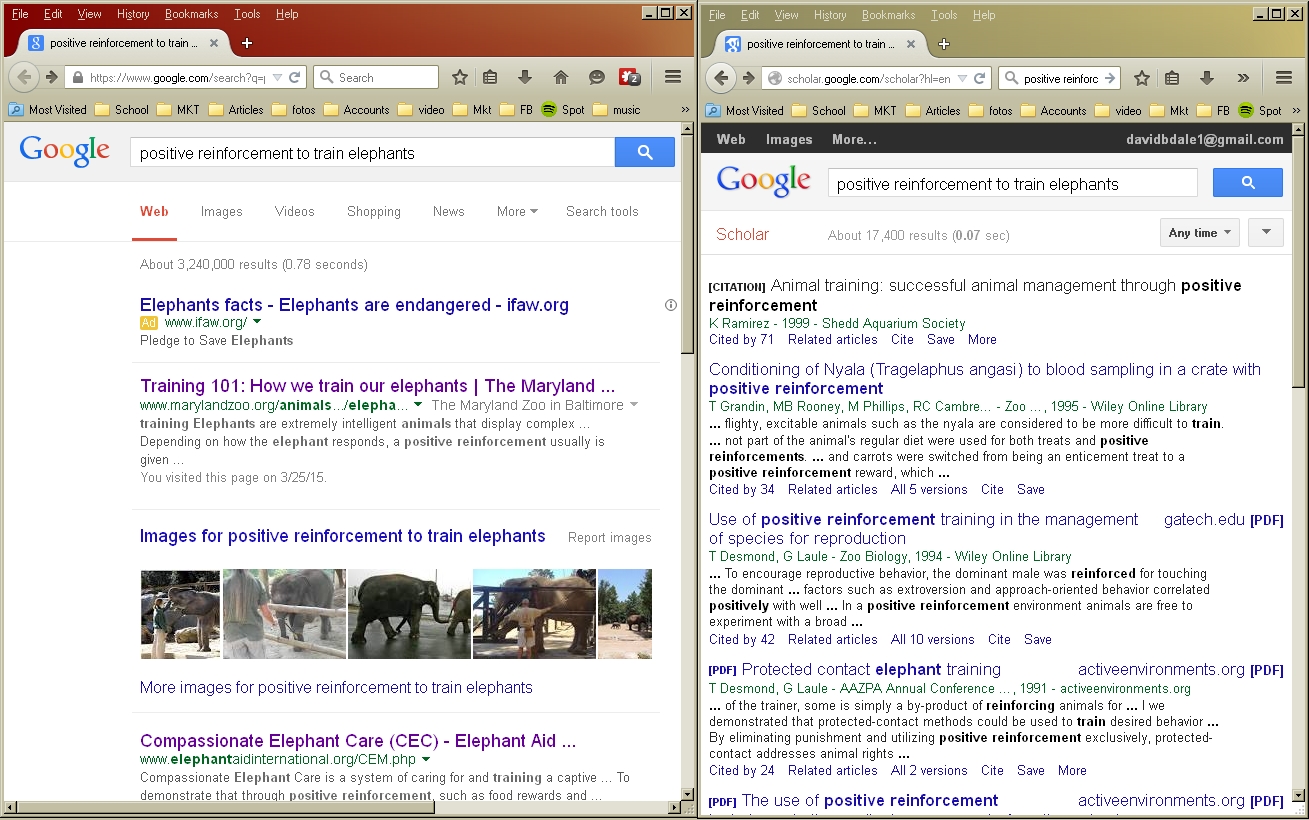
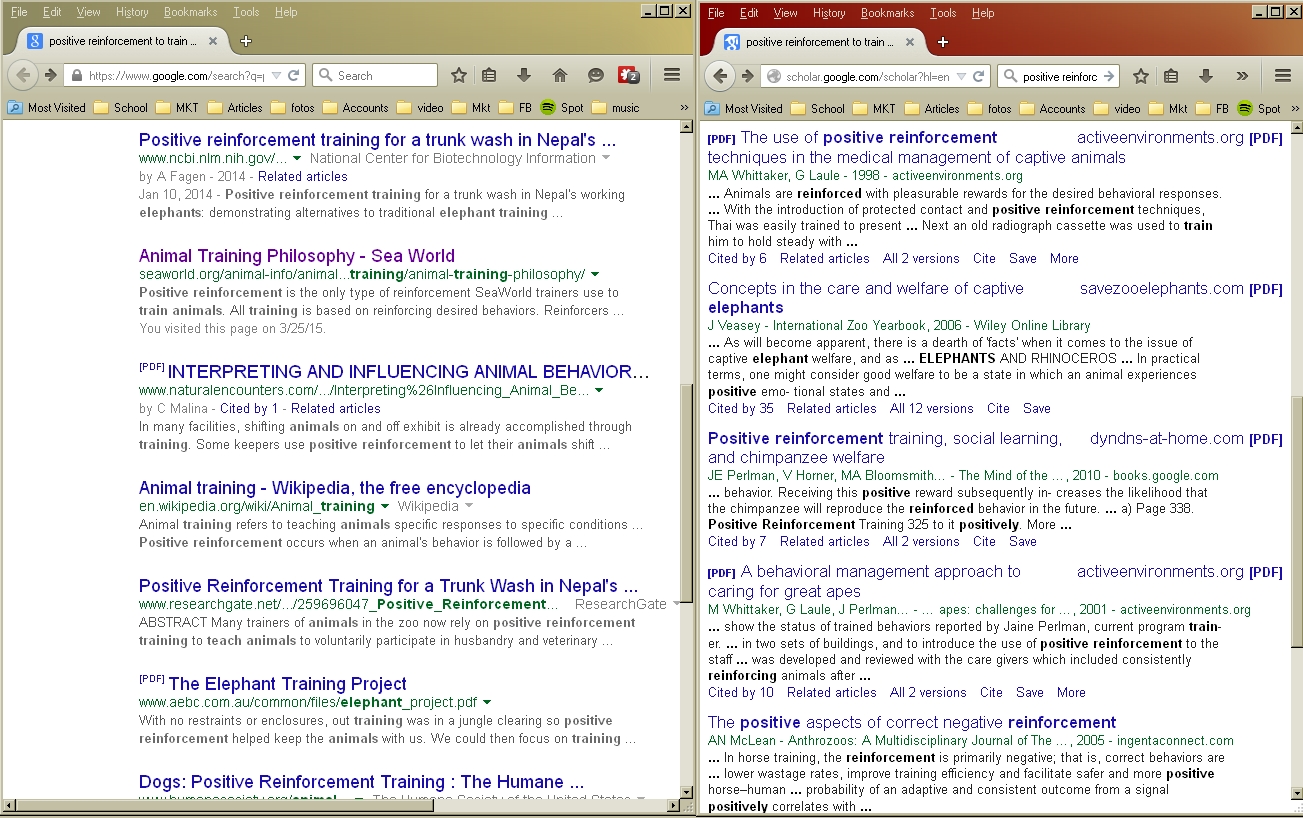
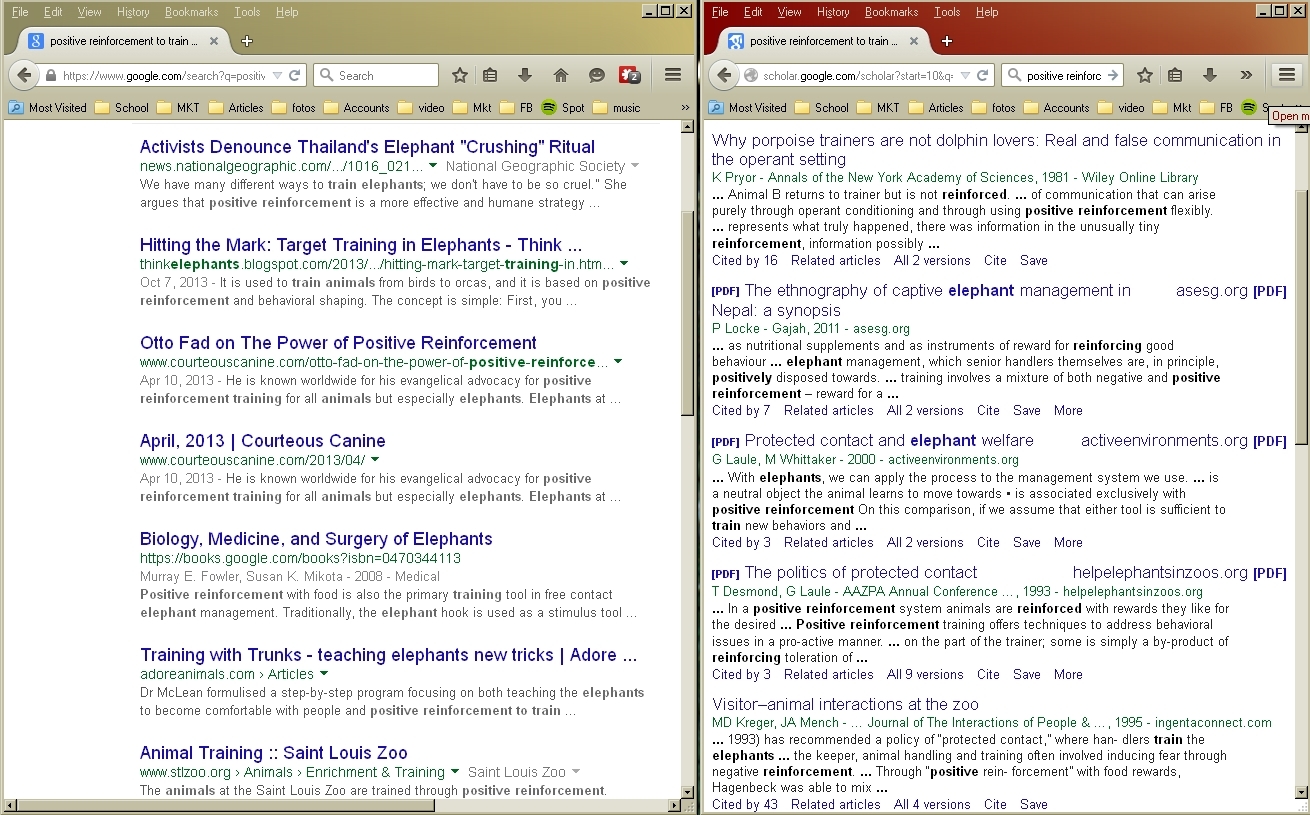
Here’s a side-by-side comparison of the search results delivered by Google and Google Scholar for an identical simple search request: positive reinforcement to train elephants.

Google1Google2Google3Notice few if any common sources are delivered by these two search engines. Popular sources are offered on the left; academic sources are offered on the right.

Posted in David Hodges, davidbdale, Professor Post, Writing Lessons | 1 Comment

Definition Rewrite–betterthanyou

Content is a little slim, betterthanyou

Posted in X Archive | Leave a comment

Another Research Case Study

I Can’t Find any Good Quotes.

This common complaint rises from a misunderstanding that the only useful quotes are those that “support my thesis.” As I’m sure I’ve told you more than once, establishing a thesis before you’ve begun your research, and then using searches to go looking for sources that “agree” with your pre-conceived argument, is a total waste of your time and your readers’ time.

Look! I Agree with Several Authors!

The best you can accomplish from such a search is finding several authors who have already written on your topic, whose views have already been published, who have already contributed their arguments to the academic community, who, in other words got there ahead of you.

Your paper citing all their beautiful arguments and evidence is the equivalent of publishing 3000 words to say:

Look! I read these guys and I agree with them! Aren’t we good?

Search Broadly and Read Widely

The only way to do original academic work is to develop your own point of view by becoming VERY familiar with your subject matter. That means remaining open to ideas on ALL SIDES until you finally decide you’ve got something original to contribute.

If you keep your searches general, you’ll expose yourself to more than a single perspective on your topic. Search broadly and read widely, even if the source appears at first to have little relevance to your hypothesis. You never know what will be valuable until your paper takes real shape.

Until you’ve done a good bit of reading and writing, your thesis is a moving target. What you read today could very well help you prove what your thesis becomes tomorrow.

Another way to say the same thing is that we:

Research to Form a Thesis,
not to Prove a Thesis.


And now, a Case Study.

Username was writing about cruelty to elephants. His topic, expressed in several hypotheses, was the counterintuitivity of going to the circus or the zoo to celebrate and experience the beauty and majesty of these massive, intelligent animals when, to accomplish that human-animal interaction, the elephant handlers have systematically mistreated them, deprived them of their very nature, and turned them into something they are not: manageable performers.

No Sources

The first draft of Username‘s Definition Essay contained no citations. It made several very strong allegations: that elephants were bound and isolated, that they were bull-hooked, that they were tortured as a means of “training.”

The trouble with the draft was it couldn’t persuade readers that such behaviors actually occurred without evidence. Needless to say, Ringling Brothers trainers do not go on record bragging about beating, binding, and starving their animals to “break” them into submissive performers.

The Dog Training Source

Unable to “Find any good quotes,” Username included an intriguing source from an entirely different arena in his second draft. A dog trainer named Amy Jorgensen was more than happy to go on the record about her techniques in an article titled, “Positive Reinforcement; Negative Reinforcement in Dog Training.”

Username wanted to highlight the Negative Reinforcement he was convinced was being used at Ringling, and perhaps at zoos, to force wild animals to submit. Here’s the citation he used:

Dog trainers stand behind the idea of positive and negative  reinforcement. They claim, “the negative or positive aspect of both methods refers to whether the trainer takes something away (negative) or adds something (positive) to bring about the desired behavior change. Collars that deliver an electric shock to a dog who barks excessively are one example of positive punishment — the shock is added to reduce the frequency of the behavior”

Notice the quote calls electric shock a “positive punishment,” but the article’s title calls it “Positive Reinforcement.”

Now, calling an electric shock a “positive” reinforcement is a very warped thing to say! Positive reinforcement for good behavior is happy talk, petting, and maybe a small treat, right? But Jorgensen offers a different definition for the term. She withholds something desirable and calls that negative reinforcement, or adds something horrible, like electric shock, and calls that positive reinforcement. If this is the model the elephant community uses, it really does sound like torture.

But it requires readers to radically rethink the meaning of “positive reinforcement.”

A New Search

Even though the quote doesn’t come from the circus, this new way of describing “positive reinforcement” gives Username an opportunity to associate the circus trainers with the cruel treatment he’s certain they’re guilty of.

A quick Google search for “positive reinforcement to train elephants” yielded several articles from the Maryland Zoo, from Compassionate Aid International, from SeaWorld, etc., all bragging that they use “positive reinforcement” to train their animals. We have to wonder now, what they mean by that.

The Maryland Zoo describes its technique as operant conditioning:

The Maryland Zoo in Baltimore trains elephants using an operant conditioning system. Operant conditioning is a process used to positively reinforce behaviors that are desired and to decrease behaviors that are not desired by training the animal away from those behaviors. Punishment is never used. The animal is given a variety of cues for a specific behavior in the form of either an audible, tactile, or visual stimulus. Depending on how the elephant responds, a positive reinforcement usually is given in the form of a food item, verbal praise, or an enrichment item. Conditioning occurs when the elephant’s correct behavior is achieved and reinforced consistently through repetition over an extended amount of time.

Notice the Maryland Zoo is careful to add that “Punishment is never used.” But SeaWorld isn’t as careful:

Positive reinforcement is the only type of reinforcement SeaWorld trainers use to train animals. All training is based on reinforcing desired behaviors. Reinforcers motivate an animal to repeat the desired behaviors. The reinforcer tells the animal, “Yes, you have done that well.”

SeaWorld offers an example of verbal praise, but they don’t specifically say that the verbal reinforcement is the ONLY reinforcement technique. They also don’t say what the Maryland Zoo DOES say, that punishment is never used.

Perfect Definition Essay Material

So now we know from the Jorgensen quote that different people mean very different techniques when they say “positive reinforcement.” The Maryland Zoo and SeaWorld explanations may be completely innocent, and they may be using the common and logical definition we would all understand.

But now that Jorgensen has shown an alternative, we have to accept that “positive reinforcement,” could very well mean giving an elephant electric shocks, or mistreating it in other ways, when it “misbehaves,” which any normal person would call NEGATIVE reinforcement.

So, even if Ringling were to insist they use positive reinforcement, using Jorgensen’s definition, they might still be torturing their animals.

Not Immediately Obvious

It’s counterintuitive, if we want to demonstrate mistreatment, to go searching for “positive reinforcement to train elephants.”

But the case study demonstrates the value of using a broader search strategy and remaining open to the contradictions and nuances in whatever sources we find to see the flaws in the arguments of others, and to avoid them in our own.

Feedback Required

Please reply below if this advice has been useful to you. Reply also if it hasn’t been useful. If you want me to believe you didn’t read it despite my efforts to help you, don’t reply at all. 🙂

Posted in David Hodges, davidbdale, Professor Post, Writing Lessons | 21 Comments

Definition rewrite — CasperTheGhost

Death is usually looked at like a sad, painful stop to a beautiful life, but to those who suffer from terminal illness, death can be a beautiful end to a sad, painful life. In America, a terminally ill patient has no legal way of putting an end to the suffering their disease comes with, but in Belgium, a law has been passed that gives its citizens this right.  Euthanasia has been legal in Belgium since 2002, but just recently has it become legal for youths to receive this treatment. This law has allowed patients and their parent the comfort to know that they will not have to live a life full of pain and suffering, that they can die a “good death”, which is what the word Euthanasia means.

Euthanasia is a medical practice of intentionally ending someones life to relieve pain and suffering. It is done in full supervision of, and usually administered by doctors, making it fully safe and pain free. It is simply a doctor giving the patient a lethal does of two medicines, one to slowly ease them into unconsciousness and the other to ease them into death. This differs from a similar form of death known as physician-assisted death. This is when a doctor gives a patient a bottle of different pills to take at home, and allows the patient to decide when and if they take the pills.  The pills have a similar effect as the medicine used in euthanasia, some of the pills are used to make the patient unconscious and the others to put them to their death.

Euthanasia is a safer and generally better practice than physician-assisted death, and that is because of the doctor supervision.  With euthanasia, everything is done with a doctor watching, so any complications can be quickly solved.  In physician-assisted death, the patient can come into a bunch of problems, with no one to help.  If they receive the wrong dosage of medicine, or they somehow don’t take all of the prescribed pills, they could be left in a worse state then they originally were.

With the passing of the law, many people in Belgium feel that it will create “death tourism”, and that euthanasia is what Belgium will be known for.  To combat this, the Belgian parliament have put in place a list of stipulations a patient needs to meet before they apply for euthanasia. Although no age limits are set, the law says that the child must display “a capacity of discernment and be conscious at the moment of the request,” and psychologists must test them to confirm they understand the gravity of the situation and what they are doing.  Minors need parental consent, and also approval from their doctor, saying the child is near death, and suffering constant and unbearable physical pain with no available treatment.  With these stipulations, there is no way a “tourist” could go to Belgium just to get legally euthanized.

Euthanasia is a seriously miss-interpritade practice.  They hear the word and think of people committing suicide, when in reality, it is very safe and heavily regulated.  Instead of being a practical social taboo, euthanasia should be embraced. For the average person, a law allowing euthanasia has no affect on them, but for someone suffering from a terminal illness, that law would be freeing.

Posted in X Archive | 1 Comment

Definition Rewrite – MoneyTrees4

Is just enough too much?

It can be said that any amount of multivitamins is an excess because they are not conducive to a person’s health.  This can apply to my topic of the true usefulness of multivitamins because it is becoming more believed that the supplements are useless. If this is true, then perhaps we can also say that not only are they useless but can be detrimental to one’s health. Researchers are saying that any amount of multivitamins is an excess because we get all the vitamins and minerals from the foods we eat. When trying to figure out how much of these multivitamins we should take if any, we encounter words such as useful, health, and deficiency.

Now let’s say, contrary to growing belief, multivitamins do have some use. It can be disputed how much a person needs. Of course it will differ with age, gender, and other health characteristics.  What is deemed to be an excess to one person may be just right or not enough for another. In the case of multivitamins however, the only way we can compare what is too much for certain people is through multiple tests on their health. With that said, it is not a conscious decision on what may be too much for our bodies or what may not be enough. It would in-fact be easier to define a deficiency. With a deficiency in something, it is likely will see negative effects before an excess.

Nevertheless, one can evaluate how they feel after taking a certain supplement or eating a certain food. For example, taking a supplement for 30 days and recording how it makes you feel, followed by cutting the multivitamin cold turkey and recording how you feel. It is more likely for an adult to try this method than a child. The reason for this can be either because children are less likely to be health conscious; an adult is more likely to have some kind of disorder that prohibits them from eating too much unhealthy products. Regardless of the reason the point is that what is too much for one person can be regular or perfectly normal for another and vice versa.

With that said, an excess can be something tangible or otherwise, that is more than enough for a person. Whether or not this person realizes something is an excess such as in this case with supplements is irrelevant.

In order for us to evaluate the meaning of one word, there may be others that have to be clarified. When we look at what an excess is, we also should look at words such as proper, useful and health. These tie into an excess because in a way, a person’s point of view on the word can be related to how useful they believe something to be. We can also define usefulness as being of service or helpful. In the case of multivitamins however, the argument is that they are useless so any amount is an excess. The definition of proper easily varies from culture to culture, household to household, city to city etc. The important thing when arguing a definition is to remember the different point of views.

Posted in X Archive | 6 Comments